Insights
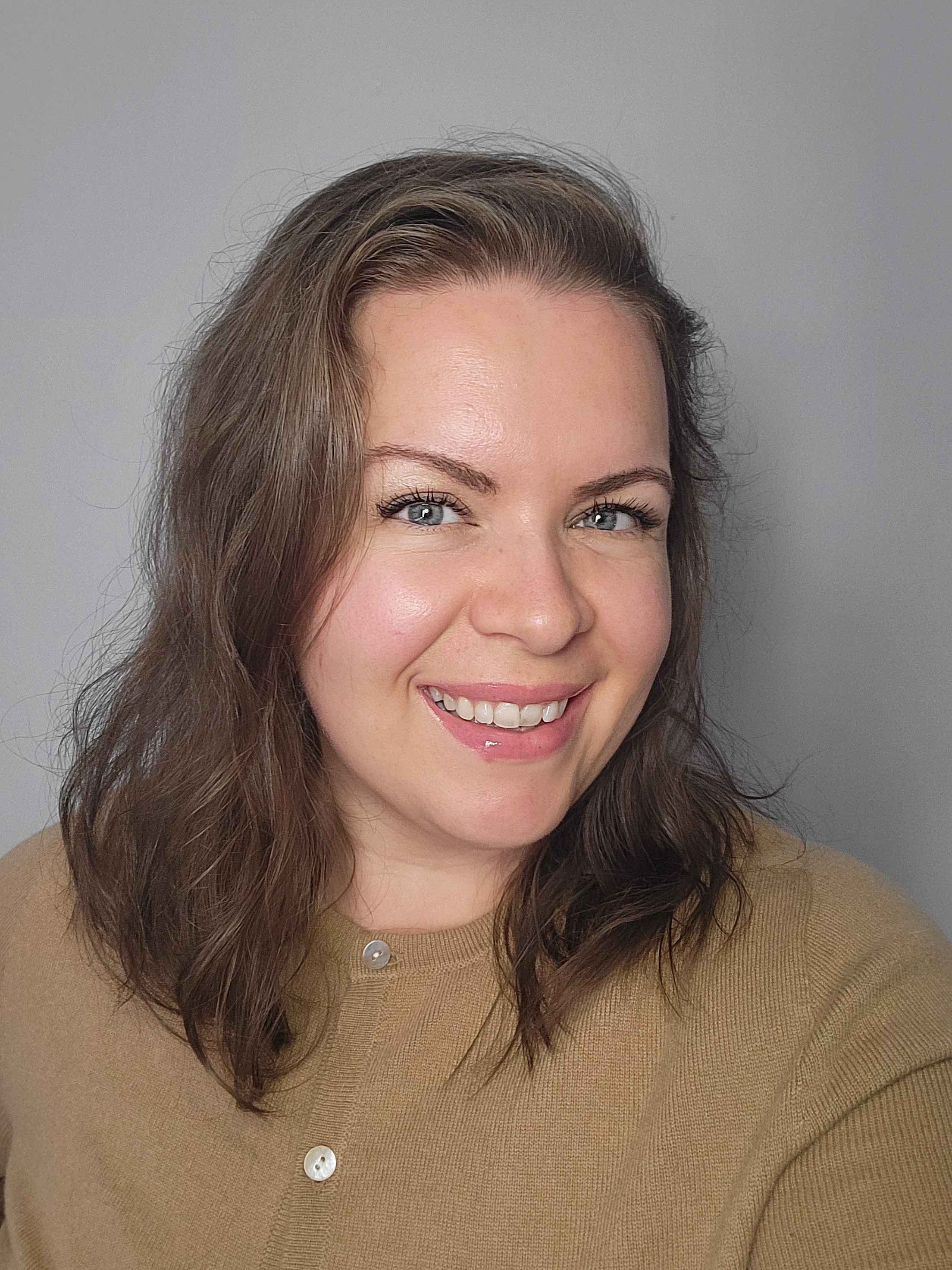
Laura Vasquez Bass, PhD
May 26, 2026
Having spent 15 years studying, reading, and writing about literature and the arts I can confidently and objectively say I believe I am a "good" writer. What's a good writer to me? Well, in technical terms I understand the mechanics of academic writing: how to organize information for maximum impact; how to write clearly; how to connect ideas and make them flow for the reader; how to introduce evidence, analyze it, and then make insightful conclusions, etc. And, more broadly, I have a deep appreciation for language and words, and know how to use them to evoke a desired sensation in the reader—be it through sensorial language, thought-provoking oxymorons, or poetics that makes someone immediately feeling something before they even understand it.
I think the reason that I love to write is because I care deeply about the subjects I write about. My passion for social justice, for equality and equity, and for lives that insist and deviate despite the prescribed futures into which they were born, is redolent in the words, sentences, and paragraphs that I write (and re-write).
Having said this, sometimes my flow can be more than a bit janky. When writing is complicated, multilayered, and drawing together many different threads in the hope of producing an (aspirationally) coherent narrative—not to mention of political or social consequence—it's so easy to find yourself in an inescapable tangle. But I'm a "good" writer—why can't I get myself out of this, you may ask.
My answer is this: being in a dense writing thicket that you can't make your way out of has nothing to do with your "skill" level. In fact, I'd argue that the more complex the argument, structuration, and stylistic delivery of the piece, the more likely at some point you're going to be faced with a blockade. If you're at a point where you've been stuck on the same project for a long time, or perhaps you've finished it but can't bear to press the "submit" button because it just doesn't feel right, that's okay. You are no less skilled or no less qualified for this work. But it might be a sign that it's time to consult an outsider who can see the thicket for the bush.
If this still sits uneasily with you, let's break down further why "good" writers like yourself need (and should seriously consider working with) editors.
Getting Stuck Should Not be a Point of Shame
Academia emphasizes individual acclaim—the first-author peer-reviewed journal article, the single-author monograph, etc.—but those of us who've been in academia know that none of this heavy intellectual work happens in a vacuum. It happens through collaboration and feedback from colleagues, and even students. So, accordingly, why is there a presumption that (a) if you're good at what you do you shouldn't need to work with an editor and (b) that getting help in some way detracts from the individual time, work, and dedication you've put into the production of your scholarship? There is no way to uniformly change academic culture on this topic, but there is a way to resist giving in to the shame it's unjustly making you feel.
And resist you should. Because the truth is, the scholars and writers whose work endures—whose arguments cut through and whose prose actually moves people—are almost never working alone. They are in dialogue. With mentors, with peers, with editors. The solitary genius myth is not only factually dubious, it is actively harmful to the quality of intellectual work being produced. Getting an outside perspective isn't a confession of inadequacy, it's a sign that you care enough about your work to want it to actually resonate.
Editors Amplify Your Voice, They Don't Re-write it
This is perhaps the most persistent misconception I encounter: the fear that bringing in an editor means handing over authorship. That your particular way of seeing the world—the thing that makes your scholarship yours—will somehow get sanded down into something generic and committee- or production team-approved.
In practice, a good editor does the opposite. They read you closely enough to understand what you're trying to do, and then they help you do it better. They're not imposing a style on your work. Rather, they're holding up a mirror and saying, here's where the argument drops off, or here's where you lost me, or here's where something brilliant is buried under three sub-clauses and a hedging parenthetical.
If you've ever had a trusted colleague read a draft and come back with feedback that made everything suddenly click into place, you already know what a good editorial relationship feels like. The only difference is that a professional editor brings both that attentiveness and a structural expertise to the table, consistently, and without the social awkwardness of asking your department colleague for the fourth time.
Conclusion: Don't Be a Martyr
Do not suffer when there are qualified professionals who can actually help you out of this rut. It's also worth remembering that your important research is benefitting precisely no one if it sits unpublished in a folder on your computer—or if it gets published, but you're not pleased with the final result because not enough time was spent on refining the writing.
The stakes of your work are too high for false modesty. The communities, histories, and lives that animate your scholarship deserve writing that reaches its fullest potential. You put in the years of research, the intellectual labor, the emotional weight of caring deeply about this subject matter. Don't let the last mile—the rendering of all that work into clear, compelling prose—be where it falls apart.
Getting an editor is not an admission that you can't write. It's an assertion that what you're writing matters enough to get right.
If you're wrestling with whether or not to seek editorial support right now, you don't have to figure it out alone. Many academic editors—myself included—offer free consultations to help you understand what kind of support might be right for your project and where you are in your process. Book a free call with me here or send me a message here. I'm happy to help you think it through.
If you found this post helpful and want more of my tips, tricks, and advice about academic publishing and surviving the PhD, click here. You'll get free access to my blog "Publish and Perish," plus much more to help you excel at academic writing and PhD life.