Insights

Insights

Publishing in a divisive environment: The art of the breadcrumb, or iykyk

Publishing in a divisive environment: The art of the breadcrumb, or iykyk

Publishing in a divisive environment: The art of the breadcrumb, or iykyk

At a time when higher education in the United States is under immense pressure, scholars working in high-stakes, politically charged areas such as race, gender, and sexuality studies are feeling profoundly torn. On the one hand, this research feels more urgent and more necessary than ever. On the other, there are very real dangers to continuing to publish as if we were living in less precarious times. So, how do scholars move past this? How can they continue to publish with authenticity in this environment?

At a time when higher education in the United States is under immense pressure, scholars working in high-stakes, politically charged areas such as race, gender, and sexuality studies are feeling profoundly torn. On the one hand, this research feels more urgent and more necessary than ever. On the other, there are very real dangers to continuing to publish as if we were living in less precarious times. So, how do scholars move past this? How can they continue to publish with authenticity in this environment?

At a time when higher education in the United States is under immense pressure, scholars working in high-stakes, politically charged areas such as race, gender, and sexuality studies are feeling profoundly torn. On the one hand, this research feels more urgent and more necessary than ever. On the other, there are very real dangers to continuing to publish as if we were living in less precarious times. So, how do scholars move past this? How can they continue to publish with authenticity in this environment?

Laura Vasquez Bass, PhD

Feb 12, 2026
At a time when higher education in the United States is under immense pressure—to put it mildly—scholars working in high-stakes, politically charged areas such as race, gender, and sexuality studies are feeling profoundly torn. On the one hand, this research feels more urgent and more necessary than ever. On the other, particularly for those whose precarity is embodied—non-citizens, contingent faculty, scholars of color, queer, and trans scholars—there are very real dangers to continuing to publish as if we were living in less precarious times.

These dangers are not abstract. They are material, legal, professional, and psychological. They show up in hiring decisions, in tenure files, in visa renewals, in doxxing campaigns, and in institutional silences that, conversely, loudly reflect the realities of our political present.

I know this tension intimately. As I was finishing my doctoral dissertation as a non-citizen living in the U.S., I was advised to do a “comb through” of the document to carefully remove certain heavily criticized names and references, which I won’t replicate here—just in case—before uploading it into my university's scholarly repository.

This is the environment many scholars now find themselves navigating: one in which what can be said and what should be said are more than a little at odds with each other. So, how do scholars move past this? How can they continue to publish with authenticity in this environment?

Linguistic breadcrumbs: finding intellectual communities, subtly

When explicitness becomes risky, scholars have always found other ways to signal alignment. This is where I want to linger for a moment. This is certainly not a new tactic, and neither is it a failure of courage or rigor.

Think of the breadcrumb as it appears in language. A carefully chosen phrase. A particular conceptual framing. A familiar turn of speech that resonates with those already attuned to it. These are not evasions; they are modes of recognition. They allow scholars to locate one another across hostile terrain without drawing risky attention to one's self.

This might look like invoking a concept without naming its most controversial progenitor, or gesturing toward a body of work through adjacent citations. It might mean letting a footnote do quiet but heavy lifting.

For some, this feels like compromise. For others, it is strategy. And strategy, especially under conditions of surveillance and backlash, is not the opposite of integrity.

If you know, you know (iykyk): your co-conspirators will see you

There is a particular comfort in writing for an audience that knows how to read between the lines. If you know, you know is not exclusionary; it is protective. It assumes shared literacy, shared stakes, and shared risk.

Your intellectual co-conspirators will recognize the breadcrumbs you leave. They will see the sideways glance, the carefully placed citation, the precisely chosen image that appears without an explanatory caption, the conceptual move that signals where you stand even when you cannot—or choose not to—say it outright.

This is how marginalized communities have communicated across time: through code, through double meaning, through secret songs, through references that pass unnoticed by those not meant to see them. There is a lineage here that stretches far beyond the contemporary university, and it deserves to be named as such.

Your readers—the ones you're actually trying to connect with—will hear your call.

“Create dangerously”: your work is more important than ever

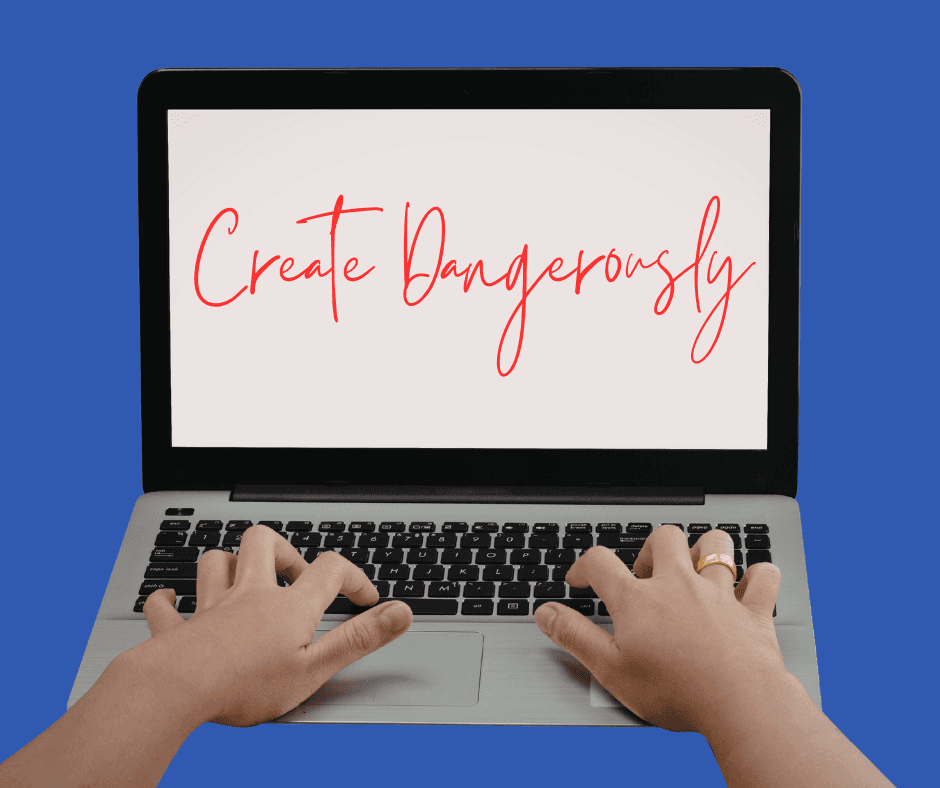
Philosopher Albert Camus, and later, Haitian-American writer Edwidge Danticat, urge artists and intellectuals to “create dangerously”—to continue producing work that matters even when the conditions for doing so are hostile. That danger does not always take the same form. Sometimes it is loud and spectacular. More often, it is quiet and cumulative.

Creating dangerously does not mean being reckless. Rather, it means being discerning. It asks: What can I say now, in this venue, in this form, without putting myself—or others—at unnecessary risk? And what can be deferred, encoded, or redirected without abandoning the work altogether?

For scholars whose research is inseparable from questions of power, inequality, and historical violence, opting out is rarely a neutral choice. Silence, too, as we know, has consequences. The challenge is not whether to publish, but how.

Publishing as legacy, not just contribution

Academic publishing has long been framed as one's contribution to a field, an intervention in a conversation. But, it is also an archive of a life in the profession.

The choices we make about where and how we publish, what we foreground and what we code, what we cite directly and what we gesture toward, all leave traces. They reflect a set of decisions about how we want our intellectual commitments to be read, now and later.

The art of the breadcrumb allows scholars to continue participating in these conversations, more carefully, yes, and, certainly, more creatively, too.


Check more blogs

A quick overview of how we work together to make your edit best in class!

Check more blogs

A quick overview of how we work together to make your edit best in class!

Check more blogs

A quick overview of how we work together to make your edit best in class!

Hate it or love it, "Wuthering Heights" (2026) shows the power of a developmental edit

An academic editor went on a toddlerless V-day date to see Wuthering Heights (2026)—and ended up exploring obsession, fantasy, and the power of a developmental edit.

Hate it or love it, "Wuthering Heights" (2026) shows the power of a developmental edit

An academic editor went on a toddlerless V-day date to see Wuthering Heights (2026)—and ended up exploring obsession, fantasy, and the power of a developmental edit.

Hate it or love it, "Wuthering Heights" (2026) shows the power of a developmental edit

An academic editor went on a toddlerless V-day date to see Wuthering Heights (2026)—and ended up exploring obsession, fantasy, and the power of a developmental edit.

5 Reasons Why Your Article is Not Getting Published—With Solutions

You've poured so many of your precious work and personal hours into perfecting an article. You finally click "Submit" and feel so relieved. And then, after perhaps months or—let's face it, maybe years—you receive a cold rejection email. Or worse, the journal ghosts you completely. This is a really hard but unfortunately very common occurrence in academic publishing. Why is it so hard to get your article published when you're putting in all the work you should be?

5 Reasons Why Your Article is Not Getting Published—With Solutions

You've poured so many of your precious work and personal hours into perfecting an article. You finally click "Submit" and feel so relieved. And then, after perhaps months or—let's face it, maybe years—you receive a cold rejection email. Or worse, the journal ghosts you completely. This is a really hard but unfortunately very common occurrence in academic publishing. Why is it so hard to get your article published when you're putting in all the work you should be?

5 Reasons Why Your Article is Not Getting Published—With Solutions

You've poured so many of your precious work and personal hours into perfecting an article. You finally click "Submit" and feel so relieved. And then, after perhaps months or—let's face it, maybe years—you receive a cold rejection email. Or worse, the journal ghosts you completely. This is a really hard but unfortunately very common occurrence in academic publishing. Why is it so hard to get your article published when you're putting in all the work you should be?

Three Ways to Practice Self-Care as an Academic

When deadlines are immovable, expectations are high, and the work itself carries intellectual, political, or emotional weight, self-care can feel like a luxury you simply don’t have.

Three Ways to Practice Self-Care as an Academic

When deadlines are immovable, expectations are high, and the work itself carries intellectual, political, or emotional weight, self-care can feel like a luxury you simply don’t have.

Three Ways to Practice Self-Care as an Academic

When deadlines are immovable, expectations are high, and the work itself carries intellectual, political, or emotional weight, self-care can feel like a luxury you simply don’t have.

Ready to Carry Less?

Whether you're a faculty member who needs editorial support for an article or a book, or a grad student who's struggling to complete your dissertation—I can help lighten your load. Let’s chat.

Share the Load!

No Editor? No Problem

No Time to Edit? Fixed

Get Published Faster!

Banish overwhelm !

Ready to Carry Less?

Whether you're a faculty member who needs editorial support for an article or a book, or a grad student who's struggling to complete your dissertation—I can help lighten your load. Let’s chat.

Share the Load!

No Editor? No Problem

No Time to Edit? Fixed

Get Published Faster!

Banish overwhelm !

Ready to Carry Less?

Whether you're a faculty member who needs editorial support for an article or a book, or a grad student who's struggling to complete your dissertation—I can help lighten your load. Let’s chat.

Share the Load!

No Editor? No Problem

Fixed CTR

Get Published Faster!