Insights

Laura Vasquez Bass
Jan 28, 2026

Three ways to practice self-care as an academic
“Self-care” is often framed as a bonus—perhaps even an indulgent exercise—that’s only done after the real work is finished. In academia, that framing can feel especially hollow. When deadlines are immovable, expectations are high, and the work itself carries intellectual, political, or emotional weight, self-care can feel like a luxury you simply don’t have.
But academic self-care and academic work aren’t antithetical. In fact, the former protects your capacity to do the latter well.
Now don’t get me wrong, that bubble bath, manicure, or quiet, solitary coffee while reading a magazine or the newspaper is certainly satisfying and a way of caring for yourself, but is it actually protecting you from academic burnout in the long run? Or, is it really just putting a bandaid on an unsustainable working model?
Below are three practical, realistic ways to practice self-care as an academic—especially if you’re carrying more than most in your personal life or via the nature of your intellectual pursuits.
1. Redefine productivity around energy, not output
Academia trains us to measure productivity by volume: pages written, articles submitted, hours logged. But scholarly work isn’t factory work. It’s cognitively expensive. Reading dense texts, holding complex arguments in mind, and writing with precision all require mental clarity and sustained focus.
When your energy is depleted—by overwork, caregiving, stress, or emotional labor—pushing harder doesn’t produce better scholarship. It produces exhaustion, self-doubt, and diminishing returns.
Academic self-care begins when you stop asking, “How much can I get done today?” and start asking, “What does my energy realistically support?”
Practically, this might mean:
Scheduling your most demanding thinking and writing for your best cognitive windows.
Separating deep work from administrative or low-stakes tasks.
Accepting that rest is necessary and some days are for maintenance, not advancement.
This isn’t lowering your standards. It’s protecting the conditions under which high-quality thinking is possible.
2. Build boundaries that protect your thinking time—and your sense of self
Academia has a boundary problem.
Emails expand endlessly. Service requests multiply quietly. The expectation to be available, responsive, and accommodating often falls hardest on scholars who are already doing disproportionate amounts of care labor—parents, women, scholars of color, and those working in politically or emotionally sensitive fields.
Self-care, in this context, is not about becoming rigid or unkind. It’s about deciding—intentionally—what deserves your best intellectual energy.
That may look like:
Checking email at set times rather than constantly.
Saying no (or not right now) to unpaid labor that doesn’t align with your values or trajectory. In other words, spending time on work that does not also serve you.
Treating writing time as non-negotiable, even if it’s short.
Boundaries are not barriers to good scholarship. They are what make sustained, thoughtful work possible.
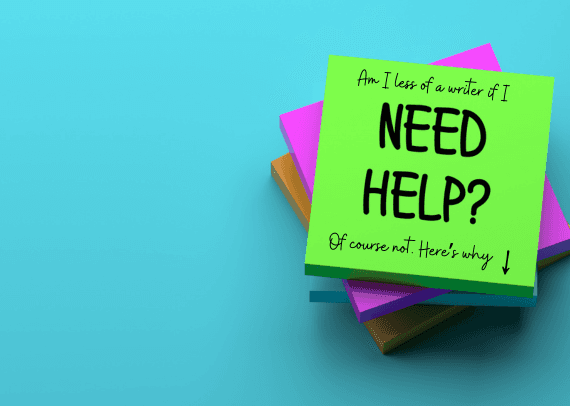
3. Get help: outsource where you can, especially for high-stakes work
One of the most overlooked forms of academic self-care is not doing everything alone.
There’s a persistent myth in academia that needing support means you’re less capable or less rigorous. I’ve even heard outsourcing some academic work described as unethical, as if doing everything alone is at the heart of intellectual moral fiber—odd, considering that collaborative research teams and co-publishing where the credit for ideas is shared are norms in many fields. In reality, seeking help, particularly for high-stakes or politically sensitive work, is a sign of professionalism and care for your research.
Outsourcing doesn’t mean relinquishing control. It means protecting your cognitive and emotional bandwidth.
For many scholars, this includes working with an academic editor to:
Clarify arguments and structure.
Reduce revision overwhelm.
Shorten the distance between draft and submission.
Safeguard sensitive work to reinforce care, precision, and respect.
A skilled academic editor doesn’t replace your voice—they help it come through more clearly. They reduce the mental load of constant self-editing and allow you to focus on the substance of your ideas rather than getting stuck in sentence-level paralysis.
This kind of support is especially important for scholars who are juggling caregiving, navigating institutional pressure, or working in areas where words truly matter.
Even if you’re uncomfortable with an outsider editing the body of your research essay or book manuscript, ask yourself: is it really necessary to put yourself through the tediousness of indexing? Is your time and energy really best used checking references and subjecting your research to the mercy of a press or journal style guide? If it isn’t, it might be time to consider getting help.
Academic self-care is about sustainability
Self-care in academia isn’t indulgent or selfish. It’s not about doing less or caring less.
Self-care creates the conditions that allow you to do meaningful work without compromising yourself in the process.
When you protect your energy, set thoughtful boundaries, and allow yourself support, you break the cycle of surviving academic life and, rather, give your scholarship the care and clarity it deserves.
And that benefits not only you, but the work you’re trying to bring into the world.
If any of this rings true to you, send me a message to learn how my academic editing services can reduce your load.