Insights
Laura Vasquez Bass, PhD
Feb 25, 2026
Last Friday, February 13th, I officially took the day off. No LinkedIn posting, no answering emails, nothing. Not because I'm particularly superstitious, but because I took the opportunity to have a toddlerless V-day daytime date with my husband.
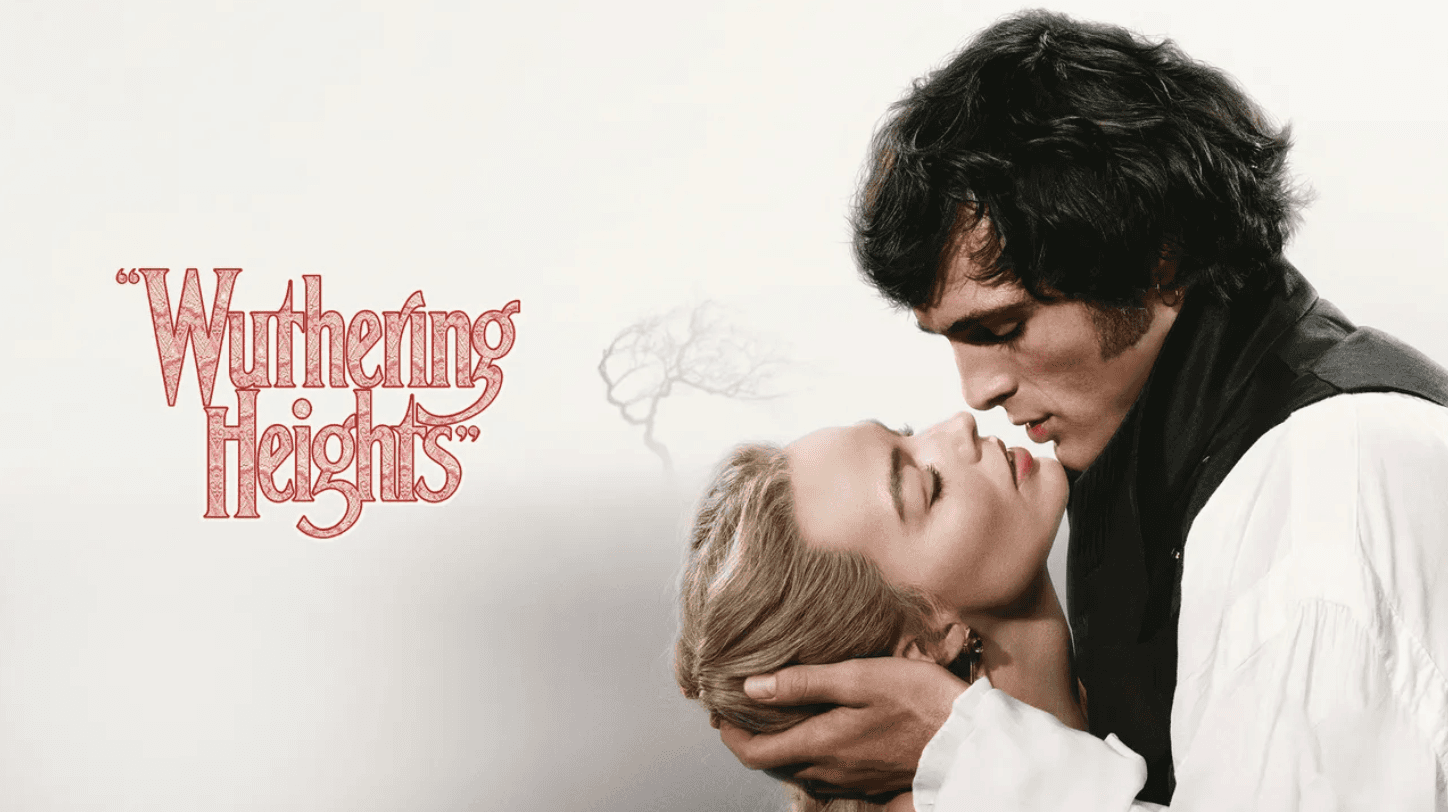
As former literary scholars, of course we went to the cinema to see “Wuthering Heights” (2026), directed by Emerald Fennell. I was excited, not just because of the delicious thrill of watching an adult-themed film in the middle of the morning—work be damned—but because of the novel's immortal place in my imagination.
Belonging to a series of powerful, diverse first-time reads by female authors, such as Mary Shelley's Frankenstein, Toni Morrison's Beloved, or Margaret Atwood's The Handmaid's Tale, Brontë's Wuthering Heights simultaneously haunted and entranced my teenage mind. The novel inducted me into how powerful, obsessive, and frankly, f-cked up love could be before I was ever gripped by its talons and learned through irrevocably falling myself.
Like—but unlike—the novel, I devoured the film deliciously. It was elaborate, over the top, sexy, visually magnetic—just plain H-O-T. And just the kind of escape, snuggled next to hubs in reclining seats with snacks all of my own, that this working mother really needed.
Was the film a faithful, or even nearly faithful, rendition of Brontë's 1845 masterpiece? No, not even close. Regardless of all of the numerous one-star reviews and scathing, in my opinion, taking-themselves-too-seriously critiques that have emerged in the few days since the film's release, I am fine with Fennell's adultery. In fact, as an academic editor, I believe the film teaches us a lot about the power of a developmental edit. You may hate it, you may love it, but at the end of the day, the finished film is the result of a series of choices, pivots, and wrong or right turns that represent what a developmental edit results in—one iteration among a series of potential other iterations of a creative project. As Pamela Avila writes in USA Today:
All there is to do, sometimes, is know in your heart of hearts that a nuanced piece of literature and a provocative and deviant piece of pop culture can exist alongside each other without one diminishing the other (my emphasis).
What is a developmental edit and how does it shape a project?
There is no unanimous definition of a developmental edit, with different editors offering a range of services under this umbrella. Broadly speaking, however, a developmental edit is any form of support offered to improve or refine a manuscript before it gets to the copyediting, line editing, and proofreading stages that immediately precede production. It is considered "big picture" feedback or dialogue between an editor and a writer that works to purportedly improve, or as I prefer to think of it, solidify rationales for the choices the author makes. In fiction, feedback may relate to plot points, character development, style, or structure, whereas in an academic developmental edit, feedback will relate to the strength of argumentation, citation choices, style, and structure.
While we could claim to objectively say that a developmental edit makes a creative or scholarly work stronger—and in the majority of cases this is of course its central goal—its power lies not only in bolstering a project's strength. Rather, a developmental edit lays out for the writer the impact of the series of choices they've made, and where these different choices may take them; for example, these choices could result in inviting conversation from a particular audience, while having the effect of alienating another, or vice versa.
In addition to value propositions, I like to think about a developmental edit as resting with the annunciation and exploration of these choices, which are merely a question of intent and writerly prerogative, rather than having anything to do with strength or weakness. As an editor, I may have a preference for the direction an argument will take, but ultimately as long as it is factually and logically correct, the writer's vision for what they are trying to put out into the world overrides everything else. With fiction writing, fact and logic bear even less relevance. And this is where I think folks are missing the point regarding Fennell's “Wuthering Heights”.
"Wuthering Heights": A 14-year-old's developmental fantasy edit
Part of the power of Brontë's novel rests in its duality of vivid, evocative detail while simultaneously embracing opacity. Heathcliff's race, Cathy's torn feelings toward Heathcliff and Linton, and just how far Heathcliff and Cathy's relationship may have progressed beyond the single kiss described by Brontë, all have complicated answers to which we will never really know—or are not meant to fully know—the answers.
To a young mind, there is much to imagine, speculate, and even fantasize about beyond what Brontë actually wrote. This is exactly the version of Wuthering Heights—in self-consciously placed quotation marks—as if conjured from her 14-year-old mind's eye, that Fennell set out to make.
Could Fennell have more critically considered questions of race, the significance of Heathcliff being brought by Mr. Earnshaw from Liverpool, a major port and hub of the British Empire's project, or exactly what Brontë may have meant when she described Heathcliff as a "lascar," meaning a sailor from the Indian subcontinent? Yes, she could have. And in the un-brave and un-bold casting of the strapping six-foot-five white actor Jacob Elordi, did she quash these questions surrounding Brontë's male protagonist's race? Yes, she did. But she was never trying to address these questions in the first place. And that's where we need to understand how a developmental edit changes the contours of a project—whether we like the results or not.
Case in point: As the camera rolls on a sex-fetish scene, we appreciate what's happening through Cathy's wide-open-with-shock-and-intrigue eyes, entranced as she sees sex up-close for the first time—to the point of a necessary masturbation. Scenes such as this serve to depict what a 14-year-old's hot-and-heavy hormonal fantasy rendering of Wuthering Heights might look like.
Takeaways
Contrary to what some might say, the sole purpose of a developmental edit isn't always to improve a narrative, because that's a highly subjective conclusion. Rather, it changes, refines, and shapes a project in line with the whims of its target audience. In Fennell's case, an ultra-serious literary community, for whom the book will always be better, were not who she was trying to reach. However, for someone looking for a hot (albeit tragic), visually sensational Valentine's watch inspired by a literary classic, “Wuthering Heights” (2026) just might fit the bill.
And more than this, whatever critics may say, Fennell's film has brought Wuthering Heights to a whole new audience, who will now go and read the book because of her film. Immediately after the film ended, even self-confessed lit lovers like my husband and I, irresistibly strolled over to Barnes and Noble to buy a new copy of the novel as I'd misplaced mine over the years and he'd never actually read it. Ready to be bought, multiple versions of Bronte's work lay stacked on a table right near the store entrance. The specific version my husband and I wanted—a small, but beautiful gold-gilded edition not unlike how a nineteenth century release may have looked—were all sold out. And isn't that something to be celebrated? (Not just for Barnes and Noble).
Ultimately, whether we critique, celebrate, or fantasize about a work, the value lies in engaging with it—and sometimes, letting ourselves enjoy it in ways the original author could never have anticipated. This is exactly what makes developmental edits, and even bold adaptations like Fennell’s film, so fascinating: they remind us that creativity, intent, and interpretation are as much part of a work’s life as its original text.