Insights

Laura Vasquez Bass, PhD
May 12, 2026
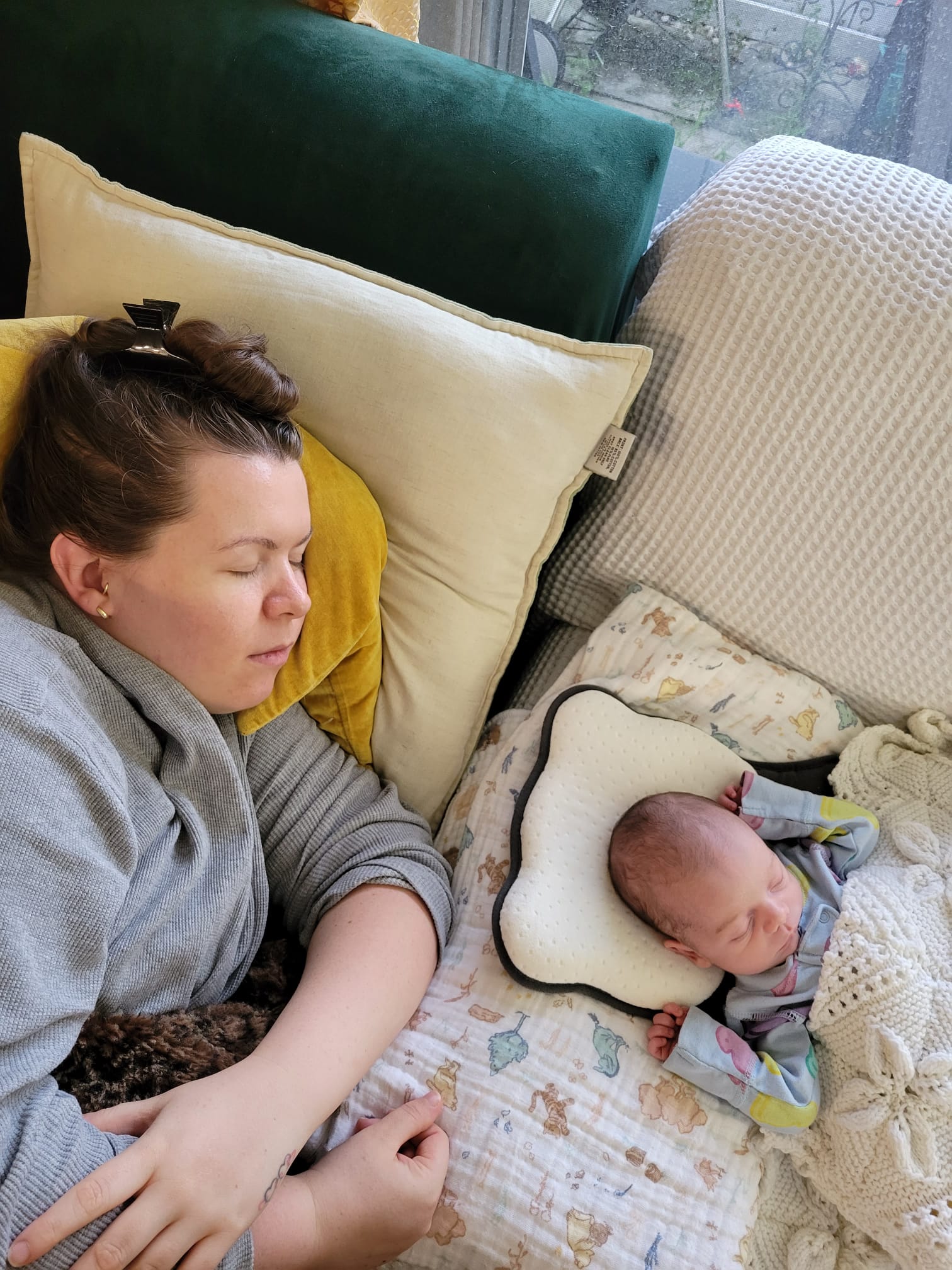
I never imagined that my journey toward PhD completion and my journey toward becoming a mother would collide. For some people who go into their PhDs as parents––those who are part of the ever-increasing demographic of mature and non-traditional students, and who have already undergone the mental rewiring that comes with becoming a parent––they can somewhat anticipate what they might be letting themselves in for. Perhaps. For those, like me, who become parents during the PhD, there is a certain amount that you just can't prepare for. After the birth of my son, I faced extreme isolation, Postpartum Anxiety (PPA), breastfeeding struggles, adrenal fatigue and chronically high cortisol levels, constant pain from diastasis recti, a child who needed surgery at six months old, and more. And then I was expected to return to teaching and writing my dissertation as if my body and mind had not just gone through the beautiful trauma of creating and nurturing a life.
Though the paths people traverse towards becoming a PhD parent might be different, there is, however, much we have in common. Unless you've been a parent throughout the entirety of your higher education journey, we all, inevitably, have to re-learn how to be a student while also being a parent. How to be someone in a professional space who is learning and trying to seek approval of those advising us, while maintaining the persona of someone who is purportedly in control and "knows" everything in domestic space. A lot of this boils down to the simple mechanics of when you research and write, how long you research and write for, and more generally, how you make it happen when there are so many other competing priorities in your life that can't be ignored––ahem, the needs of children.
I can't possibly break down every factor that enabled me to finish my PhD (and pass my defense with distinction, I might add) in one blog post, but here are some of the things I did or some of factors that contributed to my eventual success. Note: In this blog, I'm not focusing on specific research or writing techniques, but rather approaches related to mindset and organization that will help get you over the finish line.
Don't Force Yourself if You're Not Ready
"Generations of women have done this before you. There's no reason why you can't return to your dissertation and teaching after three months of paid leave."
This is verbatim what a professor in my department said to me when I was pregnant and considering taking a longer unpaid leave than the three months of paid leave that my university had recently introduced for graduate students. Being a former international student (I met and married my husband while in my PhD program) with no family living on the same continent, I knew on a carnal level that having this baby was going to be infinitely harder with no family support to (1) help with the baby when he arrived or (2) help take care of me postpartum. Those idyllic dreams of motherhood where your own mother comes to stay for a couple of weeks to cook and clean for you, comfort you, and nurture through the hardest and most wonderful of life's transitions was never going to happen for me. Additionally, I knew once I returned the clock on my remaining funding would begin ticking away––whether I was ready and capable or not to assume my research, writing, and teaching duties as before.
So, I pushed back on the expectations of my institution and took unpaid leave for the semester after my son was born. I know this is not an option for everyone. It barely was for me. My husband and I worked out that on his salary alone plus some savings, we'd manage to cover all of our expenses in the short-term and the decision was made.
If you can't take additional leave, I'd go the route of seeing what accommodations are available to you as a new parent instead. Maybe your department will be able to offer you teaching remission in exchange for fulfilling your obligations to the university in a less demanding way or with reduced hours––such as in-department administration. Alternatively, you can go the route of working with your school's Title IX coordinator. Title IX protects pregnant and postpartum students from discrimination, so if you feel you're not being adequately supported as you plan for your return to work postpartum, be sure to get in contact with the relevant point person and let them advocate for you.
Throw Yourself into Your New Role (As a Mom): The PhD Will Wait
This isn't a strategy, but a side note. You will only welcome your child into the world once. No matter what PhD-related stress and bureaucracy is happening around you, please remember that you get to do this one time (particularly if this is your first baby). The PhD will be there when you come back it. You are doing no one any favors by trying to force yourself back into your former scholarly self if you're not ready. It is just a PhD. It's an amazing, incredible feat, but it is not as important as the beautiful little human the universe has entrusted you to bring into this world.
Work Out Your New Schedule
So, the days of mammoth eight-hour writing sessions in the library are gone, especially if you're breastfeeding and need to frequent contact with your infant. You need to begin thinking about how research, writing, teaching, etc. will happen. Do you plan to have family and/or friends pitch in with childcare? Do you plan to put your child in daycare? If so, for how many hours per day.
In my situation, family or friends were not an option as my husband and I lived a 20-hour drive from his home state, and my family and close friends all live in the UK. Daycare was also way out of our budget.
Here's what we did instead: as my husband's job was a remote role in tech with a degree of flexibility, he got permission to work slightly different hours than standard EST. Typically, this would mean he watched our son in the early morning, while I taught and/or wrote, then we would switch and I had my son all day and he worked later hours to compensate for the morning. I would additionally write during my son's naps, and sometimes in the evening if inspiration struck me or I had the energy (most of the time, I would just take the evenings to chill and reset). Note: I specifically requested an 8am TuTr teaching slot from the director of undergraduate studies in my department to make this schedule work, and thankfully they were very accommodating.
Working out your new schedule / routine will perhaps be the most important step you take towards graduating.
Assume Your Position Again Slowly
When I resume my PhD at 11 months postpartum, I didn't try and do everything all at once. Knowing that I would be resuming my teaching duties, in the months before I returned I started brainstorming ideas for a new class and, later, putting my syllabus together. Then, I sourced readings for the class and organized them in Google Drive. Small steps, achieved one by one. Before the first day of class, I did a mock journey to campus and made sure I found my classroom and could operate the technology, etc. The key here is that I anticipated I wouldn't be able to just immediately turn back the clock and be the teacher I used to be; my mom brain was so comparatively full and I had to do things a bit differently. On the first day of class, I even sat with my students and talked about my journey as I equally got to know them. I was vulnerable and explained it might take me a little longer to learn their names, or if I said I would do something and I forget please don't be afraid to remind me.
As women I think we feel an incredible pressure to be the professional person we were before we had kids, but I call BS. You will never fully be that person again and that's okay. You're not making excuses for yourself, you're being honest and genuine and wearing your mom badge with pride in the knowledge that it has forever changed you. While initially you may feel weaker, less capable, or more fragile (which is normal, your body just made a human and you're physically depleted), eventually you will see what mom energy is your superpower and will help achieve incredible things in your life in addition in addition to birthing and raising people.
Run That Schedule Like Your Life Depends On It
Okay, you probably don't need to be quite this dramatic, but the point stands. When I look back on how I finished my dissertation, it wasn't through any super special writing technique or formula (though, there are some technical strategies for academic writing that I used over and over again, which I talk about in other blogs)––it was through something much more boring: consistency. Some days were amazing writing days where everything lined up: my ideas were flowing, I had no interruptions during my writing slot, my son happily entertained himself in the afternoon, which allowed me to squeeze out even more great writing. But many days, I struggled: I let myself get caught up in fixing a clunky paragraph, there was so much screaming, banging, and stomping (out of stroppiness and joy) coming from downstairs that it was really hard to concentrate, or I just didn't feel "it." Both will happen and both are okay. The important thing is you show up anyway and try and get something done––even if it's one paragraph, mapping out the sections of the next chapter and coming up with prospective subtitles, or filling in those missing page numbers from your citations. Just try to make every writing slot you have productive in some way.
Rest When you Need Rest
Something very important that I did when I was writing my dissertation was to make sure I rested frequently and enjoyed leisure activities. Did I rest whenever I wanted and do crazy fun things every weekend? No. Rest and leisure breaks were scheduled just like my writing time was scheduled. But did I sit on the sofa with my husband most nights and stream a show or a film to decompress? Yes. Did I read whatever the hell I wanted (nothing related to my dissertation) every night before bed just for the sheer enjoyment of it? Also, yes.
The beauty of creating and sticking to a sustainable writing routine is that you don't have to feel guilty when it's not your time to write. If you've banked all of your writing hours for the week (or even if you attempted to), you've done your job. You need to let your brain relax and think about other things besides your dissertation.
If inspiration strikes you, absolutely write that idea down. But know that you have a divine right to rest. If you burn yourself out too early in the process, you'll struggle to reach the finish line.
On Hard Days Never Forget Your Why
If you follow this approach and repeatedly show up everyday, putting into action a sustainable writing routine with adequate rest periods, you will end up with a finished dissertation. There will inevitably be periods where you falter, where you consider giving up. I want to close with a strategy I continually used throughout my writing process to keep me going even when I desperately wanted it to end: live, breath, and embody your reason––your "why"––for going through this process. That motivation––whether it comes from a negative place such as feeling ashamed if you didn't finish or if it comes from a positive place like wanting to make your family proud––is so damn powerful.
If you have the will to go through this process, you will be amazed at what you can push yourself to achieve. Every time I sat at my desk, I took mental note of my reasons for pushing through and finishing my PhD, despite how much harder it was to do this as a mother. And in the end I'm firmly convinced that my mental strength, which was bolstered and enriched by the challenges and joys of motherhood, was the singular most impactful force underpinning my success.